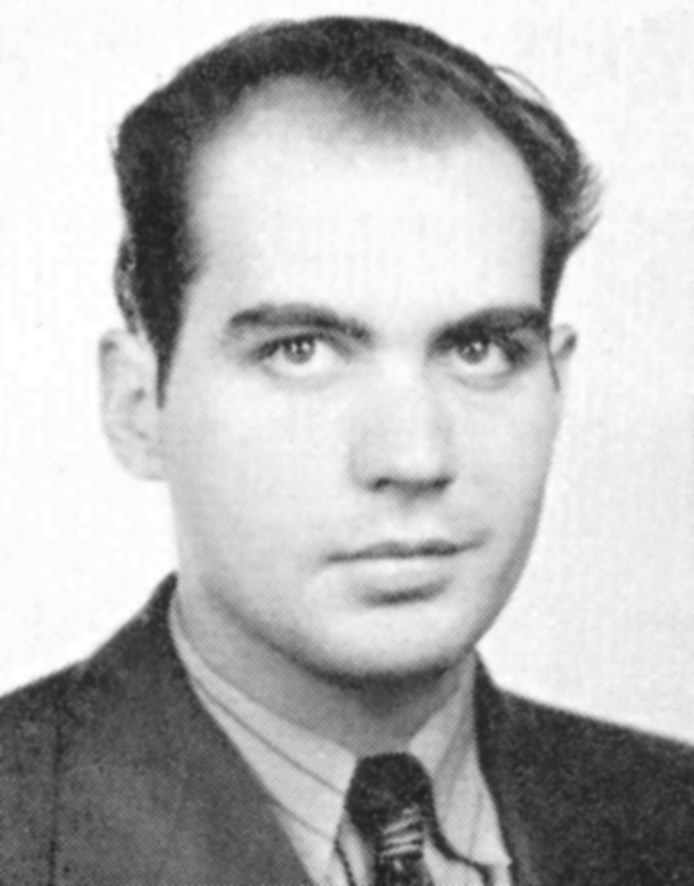
The next time you’re watching the Weather Channel, you might want to thank S&T alumnus Harry Smith for equipping today’s weather forecasters with more accurate weather-tracking methods.
Smith earned a bachelor’s degree in electrical engineering from S&T in 1942. As an engineer at Westinghouse in the 1950s, he worked to improve existing radar techniques to better detect planes. His work led to pulse-Doppler radar. Doppler radar is commonly used today for weather surveillance because it allows forecasters to detect the motion of precipitation and a storm’s intensity.
Share This Story
Spark a Memory?
Share your story! Fill out the form below to share your fondest memory or anecdote of S&T. If you'd prefer not typing, you can also share by phone at 833-646-3715 (833-Miner150).
Samantha (Somers) and Scott Holcomb
Samantha (Somers) and Scott Holcomb first met as they were trying to catch the last bus back to campus after…
Y2K debugger
As the clock ticked down to the year 2000, computer scientists around the world were fretting about the so-called “Y2K…
Lynnae (Kempf) and Joe Wilson
Lynnae (Kempf) and Joe Wilson met and became friends during their first week on campus as freshmen. “I was on…
Jack Ridley: a humanist among engineers
Jack Ridley, who won many teaching awards during his career, describes the circumstances he faced as a new...
Overcoming challenges
When Lelia Thompson Flagg, a 1960 graduate in civil engineering, arrived at Missouri S&T for the first time, there were…
For the love of circuits
Emily Hernandez, who earned a bachelor’s degree in electrical engineering in 2016, began recruiting minorities to STEM fields even before…